
Introduction
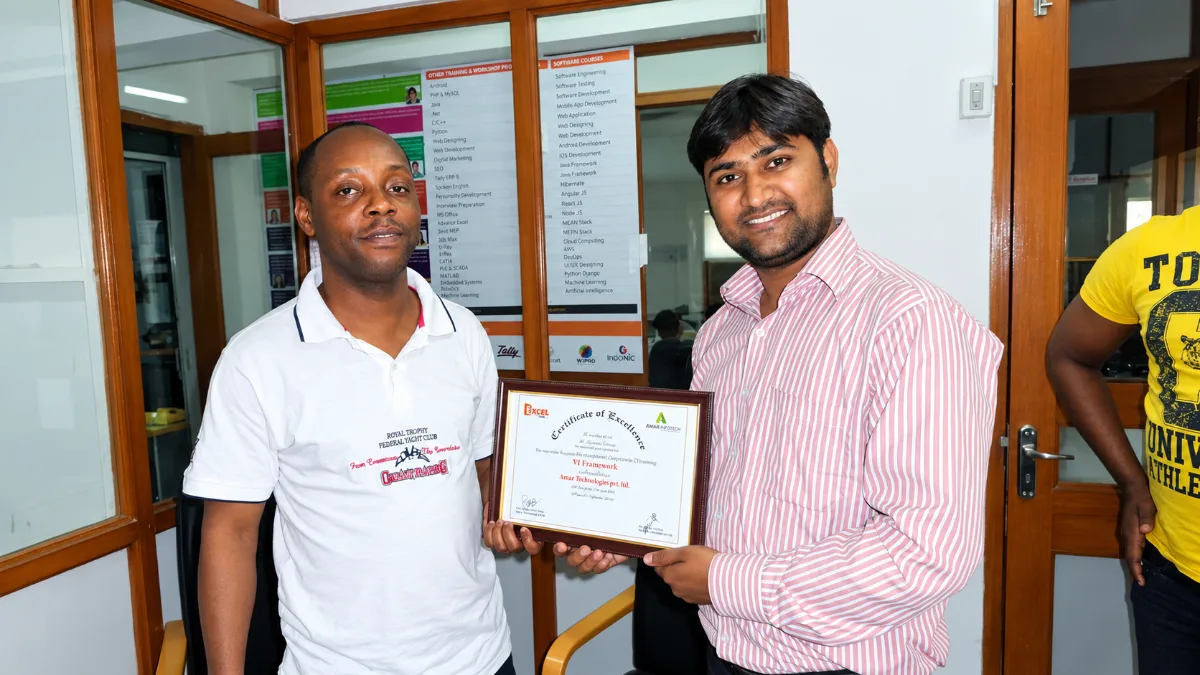
A corporate IT workshop helps organisations strengthen technical knowledge, develop practical software skills, and address specific technology requirements. In May 2014, ExcelPTP published a report about an international IT training programme conducted for professionals from the Ghana Civil Aviation Authority (GCAA) in Ahmedabad, India.
The reported workshop covered several web development technologies, including Yii Framework, Gii, Joomla CMS, Core PHP, HTML5, CSS3, MVC architecture, and Bootstrap. The programme provided a setting for technical learning and professional development.
This article explores the reported workshop, the technologies mentioned in the original account, and the important considerations organisations should evaluate when planning international corporate IT training.
What Was the Corporate IT Workshop for GCAA?
The corporate IT workshop for Ghana Civil Aviation Authority was an international technical training initiative reported by ExcelPTP on 23 May 2014. According to the original report, training sessions were conducted for professionals associated with GCAA's IT department in Ahmedabad, Gujarat, India.
The programme focused on several web development technologies and frameworks. The original article also mentions training sessions associated with Hotel Riverview and Cama Hotels in Ahmedabad.
The report describes the workshop as an opportunity for professional learning and technical development. However, it does not specify the exact number of participants, total training hours, formal assessment results, or measurable business outcomes.
Technologies Covered During the IT Training
The original report identifies several technologies associated with the workshop. Understanding their purpose helps explain the technical areas addressed by the programme.
1. Yii Framework and Gii
Yii Framework is a PHP-based framework used to develop web applications. It provides a structured approach to application development and supports reusable components.
Gii is a code-generation tool associated with Yii. It can generate application components based on defined models and configurations, giving developers a starting point for implementation.
Training in these tools can cover:
- Understanding the framework's application structure.
- Working with models, views, and controllers.
- Creating application components.
- Generating and reviewing code.
- Following conventions for maintainable application development.
These technologies can help developers understand structured web application development. The exact exercises covered during the 2014 workshop are not documented in the available report.
2. Core PHP
Core PHP training focuses on the programming fundamentals used to build server-side web applications.
Depending on the curriculum, training may cover variables, functions, arrays, form processing, database connectivity, sessions, error handling, and application security.
Practical exercises can help developers understand how PHP processes user input, interacts with databases, and supports dynamic website functionality.
For corporate development teams, the value of PHP training depends on how well the learning objectives match their existing systems and responsibilities.
The original workshop report identifies Core PHP as one of the technologies covered but does not specify the PHP version or complete syllabus.
3. HTML5 and CSS3
HTML5 and CSS3 provide the foundations for structuring and styling web pages.
HTML defines the structure and content of a webpage, while CSS controls its visual presentation, layout, spacing, typography, and responsive behaviour.
Training in these technologies may include:
- Creating structured web pages.
- Designing forms and navigation elements.
- Applying styling and layout rules.
- Building responsive page layouts.
- Improving accessibility and usability.
- Understanding how HTML and CSS work together.
These skills are useful for developers working on websites, web applications, and internal business portals.
The original report specifically lists HTML5 and CSS3 among the workshop topics.
4. Joomla Content Management System
Joomla CMS is a content management system that allows organisations to create, manage, and maintain website content.
A Joomla training programme may cover content publishing, website navigation, templates, extensions, user permissions, and routine maintenance.
Relevant learning areas can include:
- Managing website pages and content.
- Understanding templates and extensions.
- Configuring user roles and permissions.
- Maintaining website components.
- Reviewing backups and security practices.
For organisations managing content-rich websites, understanding a content management system can help technical teams maintain digital platforms more effectively.
The original article mentions Joomla CMS but does not specify the version used during the workshop.
5. Model-View-Controller Architecture
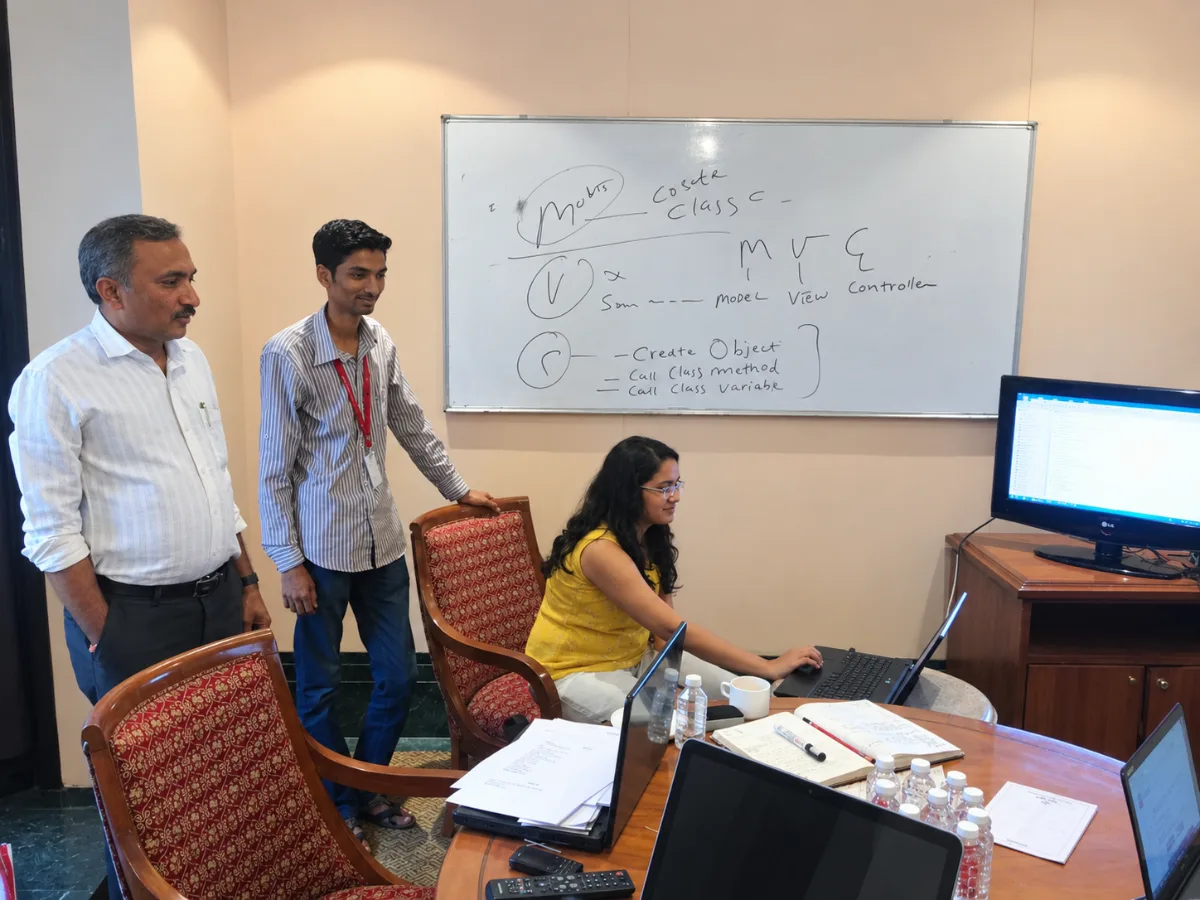
Model-View-Controller (MVC) is a software architecture pattern that separates application responsibilities into three main components.
- Model: Manages application data and related business rules.
- View: Presents information through the user interface.
- Controller: Handles requests and coordinates application behaviour.
This separation can make application code easier to understand, test, and maintain when implemented appropriately.
For development teams, learning MVC architecture can improve their understanding of how different parts of a web application interact.
MVC was one of the technical topics mentioned in the original workshop report.
6. Responsive Bootstrap Framework
Bootstrap is a front-end framework that provides reusable styling and layout components for web interfaces.
Its responsive layout system helps developers create pages that adapt to different screen sizes, including desktop computers, tablets, and mobile devices.
Training may cover:
- Responsive grid layouts.
- Navigation components.
- Forms and buttons.
- Reusable interface elements.
- Responsive page design.
- Cross-device interface testing.
For organisations maintaining web applications, responsive design can improve usability across different devices.
The original report mentions responsive Bootstrap frameworks but does not identify the specific version used.
Why Is Corporate IT Training Important for Technical Teams?
A well-planned corporate IT training programme helps organisations address specific skill gaps and support the professional development of their employees.
The benefits depend on the quality of the curriculum, the relevance of the exercises, and the opportunities employees have to apply their learning.
Developing Practical Technical Knowledge
Structured training gives employees opportunities to learn new concepts, explore development tools, and practise technical tasks.
Practical exercises can help participants connect theoretical knowledge with real-world development requirements.
Improving Development Consistency
When technical teams share an understanding of coding conventions, application architecture, and development workflows, collaboration can become easier.
Training can reinforce agreed development practices and help employees understand how their work fits into a larger application.
Addressing Specific Skill Gaps
Different organisations use different technologies and development methods. A customised workshop can focus on the tools, frameworks, and technical challenges relevant to a particular team.
This approach helps ensure that training time is spent on relevant learning objectives.
Supporting Continuous Professional Development
Software technologies evolve over time. Employees may need additional training to maintain existing systems, understand updated tools, or develop new technical capabilities.
Ongoing learning can help teams remain prepared for changing project requirements.
However, training alone does not guarantee improved productivity or software quality. Organisations should evaluate outcomes through practical assessments, code reviews, and relevant workplace measures.

How Does Offsite Corporate IT Training Work?
The original ExcelPTP report describes the GCAA programme as offsite training conducted in Ahmedabad, India.
An offsite IT training programme takes place away from the participants' usual workplace, often at a training centre or another designated location.
A well-organised programme generally involves the following steps.
Step 1: Identify Training Requirements
Begin by identifying the skills employees need to develop. These requirements may relate to programming, software frameworks, application maintenance, or web development.
Clear objectives help determine which topics should be included in the curriculum.
Step 2: Assess Existing Skills
Participants may have different levels of technical knowledge.
An initial assessment helps trainers understand the group's experience and select suitable exercises.
Step 3: Prepare the Curriculum
The curriculum should identify the technologies, topics, practical exercises, and expected learning outcomes.
For technology-specific training, confirm the relevant software versions and development environment before the sessions begin.
Step 4: Arrange Training Logistics
International training may involve travel, accommodation, documentation, training facilities, software access, and scheduling.
Organisations should clarify responsibilities and costs before the programme begins.
Step 5: Conduct Practical Training Sessions
Effective technical learning can combine explanations, demonstrations, guided exercises, independent practice, and opportunities to ask questions.
Where appropriate, exercises should reflect the participants' actual responsibilities.
Step 6: Evaluate Learning Outcomes
Practical assignments, knowledge checks, and project-based exercises can help determine whether participants understand the material.
A final evaluation can also identify topics that require additional practice.
These steps describe recommended practices for organising corporate training. They should not be interpreted as a verified account of every stage of the historical GCAA workshop.
International IT Training: What Should Organisations Consider?
Organisations planning international IT training need to evaluate more than the course content. The training environment, instructor expertise, logistics, and expected outcomes all contribute to the planning process.
Curriculum Relevance
The curriculum should match the team's technical responsibilities.
A programme covering several technologies may provide broad exposure, while a focused programme may be more appropriate when participants need advanced knowledge of a particular framework.
Trainer Expertise
Organisations should review the trainer's practical experience with the selected technologies and ability to explain technical concepts clearly.
The trainer should also be able to adapt exercises to the participants' experience levels.
Training Infrastructure
Confirm that participants will have access to the necessary computers, software, development tools, internet connectivity, and sample projects.
Testing the environment before training begins can help prevent avoidable disruptions.
Learning Assessment
Define how the organisation will evaluate learning.
Possible approaches include coding exercises, application development tasks, troubleshooting activities, and practical demonstrations.
Post-Training Application
Employees need opportunities to apply what they have learned.
Knowledge-sharing sessions, documentation, mentoring, and supervised project work can help reinforce technical skills after the workshop.
Travel and Scheduling
For overseas programmes, organisations should plan travel documentation, accommodation, transport, schedules, and other relevant logistics.
Clear communication between the training provider and participating organisation helps everyone understand their responsibilities.
What Does the GCAA Workshop Report Document?
The original ExcelPTP article provides a historical account of an international technical training initiative.
The report identifies the following details:
- Organisation: Ghana Civil Aviation Authority (GCAA).
- Training provider: ExcelPTP.
- Training location: Ahmedabad, Gujarat, India.
- Publication date: 23 May 2014.
- Reported technologies: Yii Framework, Gii, Joomla CMS, HTML5, CSS3, Core PHP, MVC architecture, and responsive Bootstrap frameworks.
- Additional context: The report mentions sessions associated with Hotel Riverview and Cama Hotels in Ahmedabad.
- Participant account: The article includes a quotation attributed to Peter Denteh Wih-Sika about combining professional learning with visits around Gujarat.
These details help establish the historical context of the reported workshop.
However, the available article does not establish the exact number of participants, training hours, formal assessment results, completion certificates, or quantified business outcomes.
Maintaining this distinction is important when documenting a company's training history. A credible case study should communicate what is known without adding unsupported claims.
How Can Organisations Measure the Success of an IT Workshop?
Completing a training programme is an important milestone, but completion alone does not demonstrate that employees can apply the skills effectively.
Organisations planning a corporate IT workshop can use several measures to evaluate learning outcomes.
Knowledge Acquisition
Compare participants' understanding before and after training through relevant assessments or knowledge checks.
Practical Technical Capability
Ask participants to complete realistic technical tasks independently. These exercises should reflect the learning objectives.
Code Quality
Where programming is involved, review readability, maintainability, testing practices, and compliance with agreed coding standards.
Workplace Application
Evaluate whether employees apply the skills in their day-to-day responsibilities after training.
Knowledge Sharing
Assess whether participants can explain concepts to colleagues, document what they learned, or support others in applying the new techniques.
Longer-Term Impact
Depending on the programme's objectives, organisations may monitor relevant indicators such as defect rates, rework, task completion, or development consistency.
The selected measures should match the training objectives. A workshop focused on HTML5 and CSS3, for example, requires different assessments from a programme focused on software architecture.
Where possible, establish a baseline before training and review progress after participants have had time to apply their learning.
Lessons for Organisations Planning Corporate IT Training
The GCAA workshop report highlights an example of international technical training. Organisations planning similar programmes can apply several general principles.
- Define the learning objectives. Identify the skills employees need and the problems the training should address.
- Choose a relevant curriculum. Match the content to the team's existing technology stack and experience.
- Include practical exercises. Give participants opportunities to apply concepts rather than relying entirely on presentations.
- Set measurable outcomes. Determine what participants should be able to demonstrate at the end of the programme.
- Plan for continued learning. Encourage knowledge sharing and practical application after training.
- Maintain accurate records. Document the actual dates, topics, participants, and outcomes for future reference.
These principles can apply to organisations across different industries. The specific curriculum should reflect each team's technical responsibilities and operational requirements.
Conclusion
The corporate IT workshop for Ghana Civil Aviation Authority is a historical training initiative reported by ExcelPTP in May 2014. According to the original account, the programme took place in Ahmedabad, India, and covered technologies including Yii Framework, Gii, Joomla CMS, Core PHP, HTML5, CSS3, MVC architecture, and Bootstrap.
The report provides a documented example of international professional IT training, while leaving several details about the programme's duration, participant numbers, and measurable outcomes unspecified.
For organisations planning similar initiatives, the most important considerations include curriculum relevance, practical exercises, instructor expertise, learning assessment, and opportunities to apply new skills in the workplace.
Accurate documentation and clear evaluation criteria help organisations understand the value of technical training and make future learning programmes more effective.